
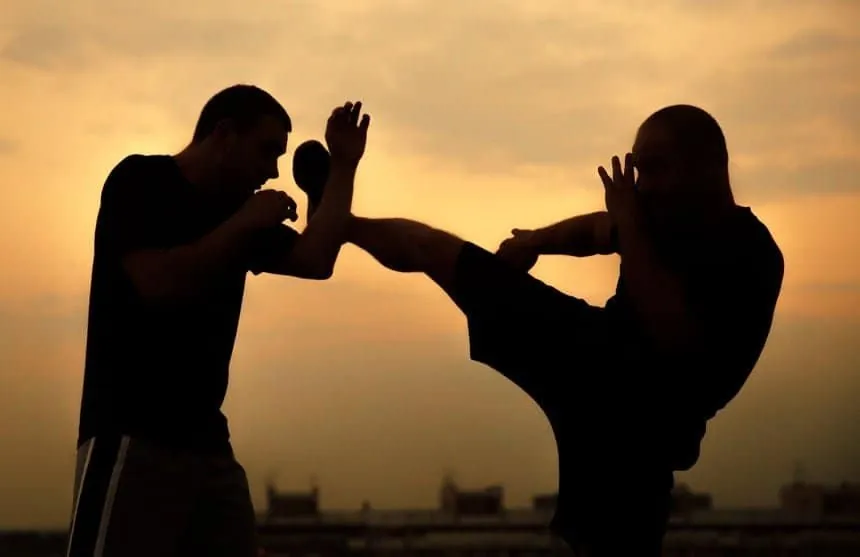
Krav Maga (Hebrew for "contact combat") is a realistic self-defense and tactical system built on practical experience. Its founder, Imi Lichtenfeld, was born in Budapest, so the system has Hungarian roots too. It deals both with preventing violent situations and with solving the ones that have already developed.
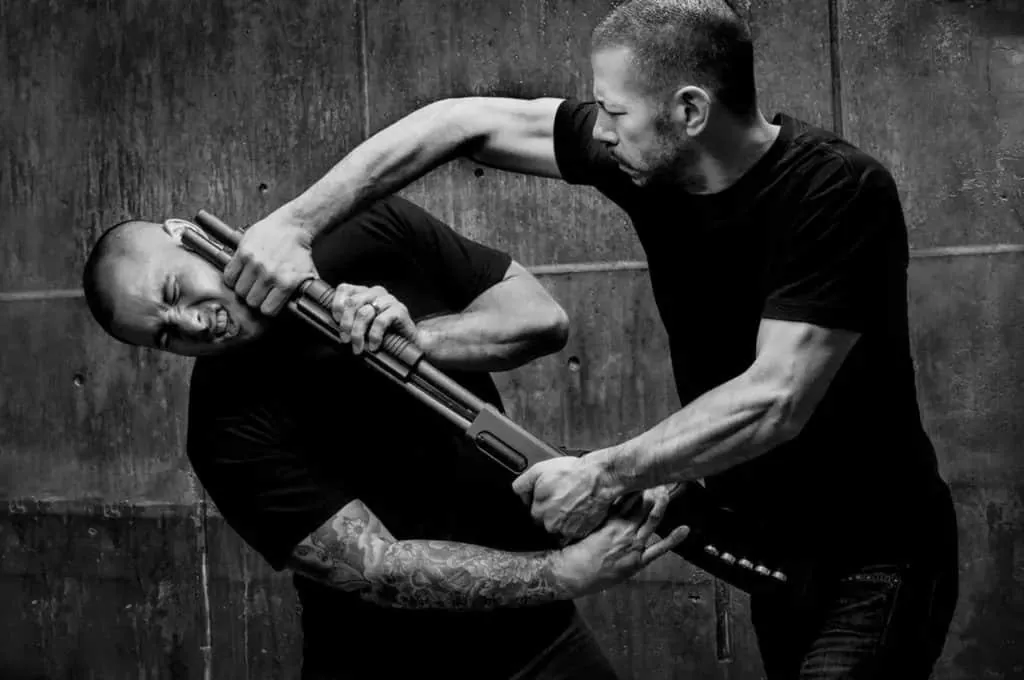
It prepares its students to hold their ground in all kinds of situations, even in extremely violent environments. It uses specific approaches, tactics, techniques and drills according to the needs of the field it is applied in.
Krav Maga is the official close-combat system of the Israel Defense Forces, and it is taught to police, military and special units in many countries. We teach the civilian version: what an everyday person may need in the street, in a stairwell or on a night out.
How is it different from combat sports?
Krav Maga is not a sport and not a martial art: there are no rules, weight classes or competitions, because there are none in the street either. The goal is not to win but to get home safe.
- Prevention first. You learn to recognize and avoid dangerous situations, and to act firmly before anything escalates.
- Simple, instinctive movements. The techniques are built on natural reflexes, so they are quick to learn and work under stress.
- Realistic situations. Several attackers, armed threats, confined spaces, surprise attacks: we practise situations that a combat sport bound by rules cannot cover.
- Escape, not fighting. You get out of the situation as soon as you can. In Krav Maga a good counterattack is one that lets you leave safely.
Who is it for?
Anyone who wants to feel safe. You need no previous training and no special fitness: the adult group is open to anyone from the age of 15, teenagers and people in their fifties train together, and most of them started as complete beginners. Fitness builds up in class by itself.
- Men and women alike who are looking for practical self-defense and want to train in good company. There is no separate women's group: the techniques build on position and speed, not on strength, so everyone works in the same class. More: Krav Maga for women.
- English speakers. Group classes run in Hungarian, and the instructor or a fellow student translates the instructions for you. We regularly have students who do not speak Hungarian.
- Anyone who prefers their own pace: private training, taught fully in English.
What does a class look like?
The adult group class is 90 minutes long and always starts with a warm-up together. Then we practise punches, kicks and simple combinations on shields and focus mitts, and for most of the class we solve self-defense situations in pairs: releases from grabs, defenses against punches and kicks, counterattack and escape. As a beginner you work with the group, but you get tasks that match your own level.
The knowledge is divided into levels that build on each other, so you always know where you stand and what comes next. You can read about gear in Krav Maga equipment and about how we keep training safe in Safety in Krav Maga class. If you are getting ready for your first time, start here: Your first Krav Maga class.
In this video Eyal Yanilov, the founder and chief instructor of Krav Maga Global, explains what exactly Krav Maga is:
Krav Maga and Hollywood
Hollywood has discovered Krav Maga too. Many films have scenes inspired by this self-defense system, to name just a few: Taken (Liam Neeson), Enough (Jennifer Lopez), Blood Diamond (Leonardo DiCaprio), Skyfall (Daniel Craig), and the list goes on.
Celebrities who train Krav Maga include Jennifer Lopez, Angelina Jolie, Hilary Swank, Ashton Kutcher, Christian Bale, Jennifer Garner, Brendan Fraser, Lucy Liu, Hugh Jackman and Brad Pitt.
If this has caught your interest, you are welcome at a trial class! It comes with no obligation; all we ask is that you sign up here, so we know you are coming.